
When you’re evaluating a commercial freeze drying machine, the purchase price is only one part of the decision. The specifications you choose today can influence throughput, operating costs and production capacity for years to come.
At Cuddon, we’ve been designing and manufacturing freeze dryers since 1963. A common conversation starts when a producer reaches the limits of their existing capacity or wants greater consistency from the finished product. At that point, equipment specifications become closely tied to production targets, operating costs and product quality.
What Drives the Cost of a Commercial Freeze Drying Machine?
The cost of a commercial freeze drying machine extends beyond its physical size.
- Shelf area, refrigeration design, condenser capacity and automation all contribute to the final specification.
- Different products place different demands on refrigeration systems, shelf spacing and processing temperatures.
- A freeze dryer processing premium pet food operates under different conditions from one handling fruit ingredients, nutraceutical products or cannabis.
Those decisions continue influencing throughput, energy consumption and production capacity long after installation.
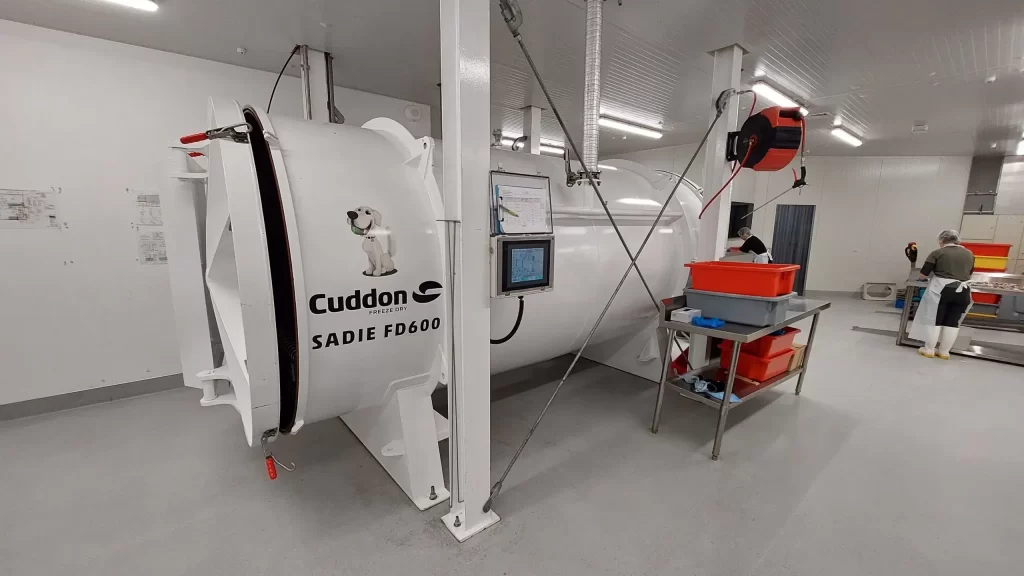
Key Features to Look for in Commercial Freeze Dryers
1. Capacity and Shelf Area
Shelf area determines how much product moves through each batch.
If you’re planning for larger production volumes, capacity deserves attention early in the evaluation process. Additional shelf area can create room for higher throughput without immediately requiring another freeze dryer.
We’ve seen manufacturers reach capacity sooner than expected when:
- New customers increase demand
- Export opportunities open up
- Additional product lines enter production
In some cases, businesses outgrow smaller systems long before they expected. Production demand can increase quickly once distribution expands or a product gains traction in new markets.
A large commercial freeze dryer can help accommodate that growth while reducing pressure on production schedules.
2. Refrigeration Design
Refrigeration operates throughout every cycle, making it a significant contributor to ownership costs.
Our GPC CO₂ range uses natural carbon dioxide refrigerant, helping reduce energy consumption across thousands of production hours.
For products requiring lower processing temperatures, our LT range supports applications such as:
- High-sugar products
- High-acid formulations
- Temperature-sensitive ingredients
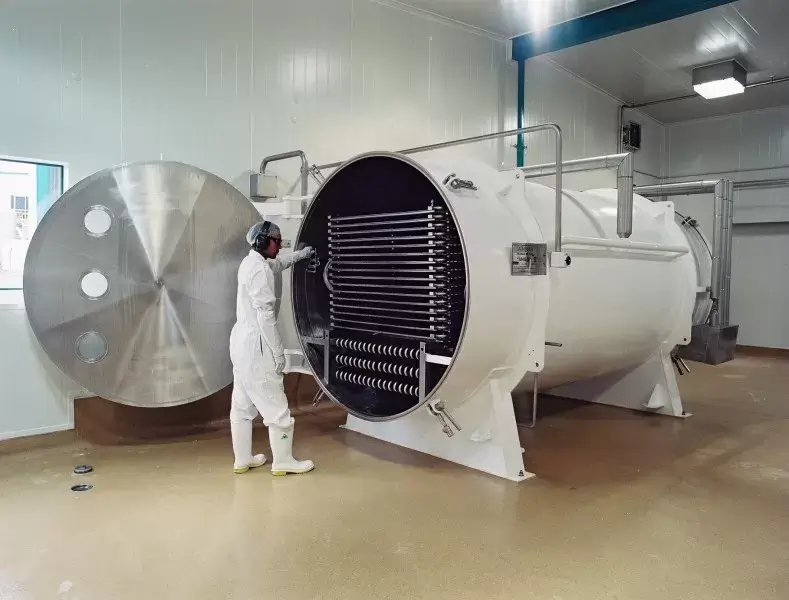
3. Heat Plates
Heat plates in a freeze dryer provide the energy required to move ice from the frozen product to the ice trap. Without them, sublimation would stall, and drying would be slow or incomplete.
Cuddon freeze dryers use a batch-style conductive heat plate designed for high-quality commercial lyophilisation. Key advantages include:
Cuddon ThermaFluxTM Liquid-filled shelves:
- For precise temperature control.
- Freeze Override protects the product in the event of a vacuum failure.
- Prevents product thawing during loading and initial vacuum pull down.
- No product scorching (compared with electric shelf systems).
- Freeze in place ability if required.
4. Recipe Control
Recipe management allows operators to save validated drying parameters and reproduce them across future batches.
As production volumes increase, repeatable processing conditions can help maintain product consistency across larger runs and multiple operators. This is valuable for manufacturers producing premium products that prioritise batch-to-batch consistency.
Product Value Changes the Economics
For producers of premium pet food, nutraceutical ingredients and cannabis products, a single batch may represent a substantial amount of revenue.
For businesses competing on product quality, drying performance becomes part of the finished product itself.
Freeze-drying performance can influence:
- Texture
- Appearance
- Yield retention
Those factors can influence how a product is received by distributors, retailers and end users.
Looking Beyond Purchase Price
Remember: The purchase price appears once, while operating costs continue throughout the machine’s life cycle.
When comparing equipment, focus on the areas that continue affecting production after commissioning:
- Energy consumption
- Maintenance requirements
- Technical support
- Equipment lifespan
Small differences in energy use can accumulate across years of operation. Downtime can affect throughput, delivery schedules and customer commitments when production capacity is under pressure.
A lower upfront cost can become less compelling if higher operating expenses continue across every production cycle. For this reason, ownership costs deserve the same scrutiny as the initial capital investment.
Why Support Belongs in the Evaluation Process
A freeze dryer becomes part of your production operation from the day it is commissioned. Support frequently extends beyond installation.
Production teams may require assistance with:
- Commissioning
- Operator training
- Recipe development
- Troubleshooting
Access to experienced engineers can help resolve issues faster and keep production moving.
For businesses entering freeze drying for the first time, training and commissioning support can influence how quickly equipment reaches its intended output.
At Cuddon, we manufacture our systems in New Zealand and support customers from commissioning through to ongoing production. That continuity helps operators build confidence in their processes as production volumes increase.
Our range includes general-purpose freeze dryers, low-temperature systems, cannabis freeze dryers and document recovery freeze dryers, allowing us to recommend equipment based on your application and production requirements.
Choosing the Right Commercial Freeze Dry Machine
Freeze-drying equipment is a long-term capital investment. The strongest purchasing decisions consider how the machine will perform across future production volumes, operating conditions and product requirements, not simply how it performs on day one.
Capacity, ownership costs and application requirements should all form part of the evaluation process before committing to a commercial freeze dry machine.
To discuss your project, explore our applications or submit a sales enquiry and speak with our team.