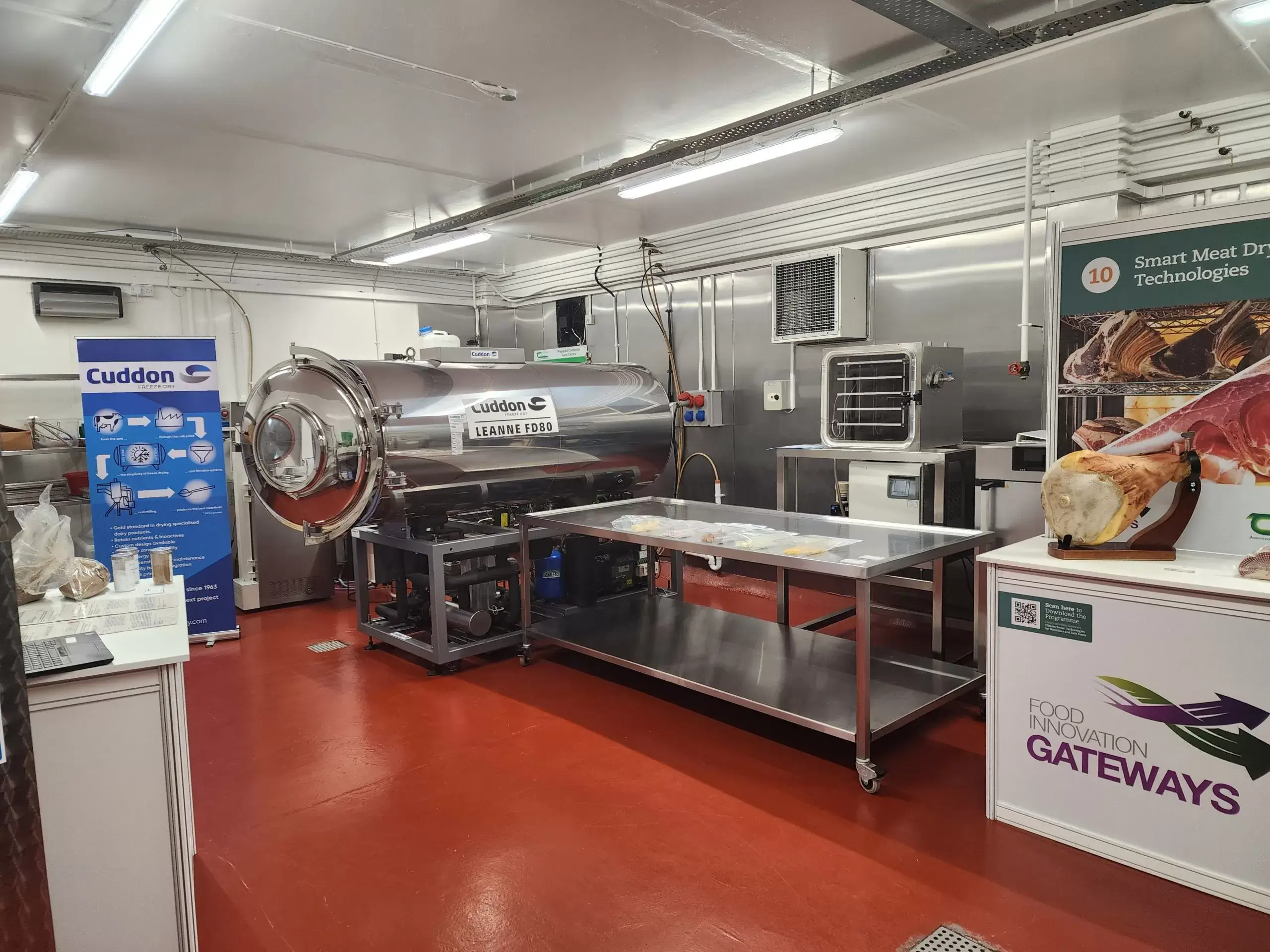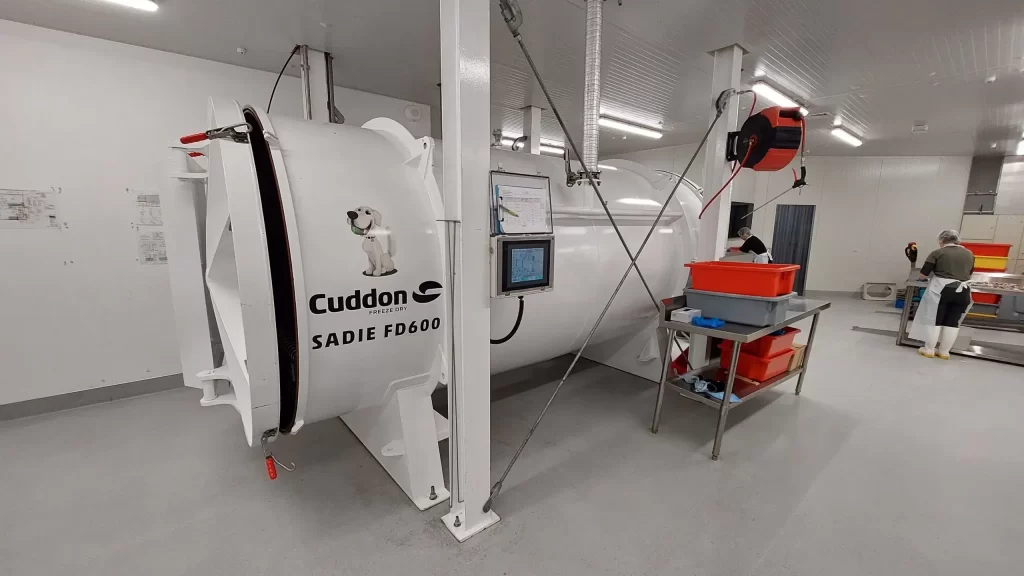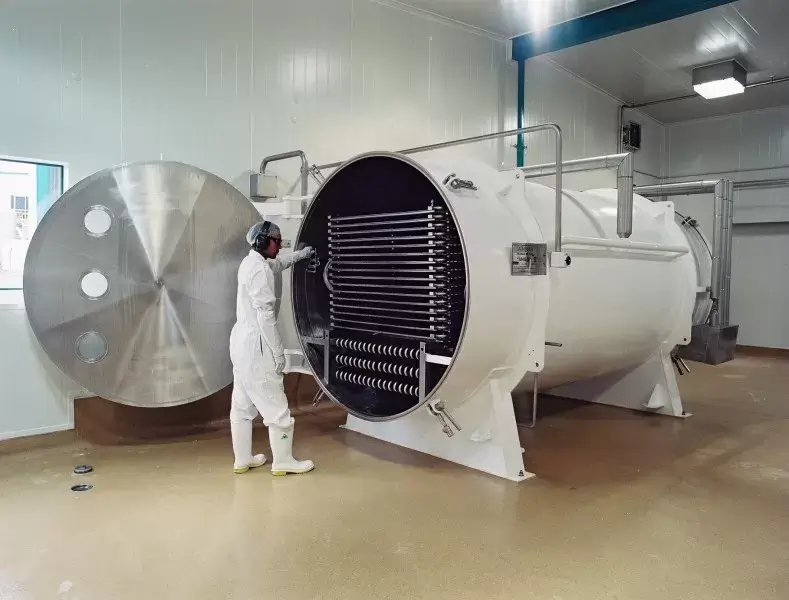
As production volumes increase, freeze drying variables tighten.
Ice load rises, condenser demand increases and minor pressure instability can extend cycle times. Systems that perform well at pilot scale often show limitations once trays are fully loaded and production runs continuously.
This is where general purpose freeze dryers must demonstrate sustained capability.
If you are evaluating a general purpose freeze dryer, you are likely addressing throughput limits, batch variability or expanding demand. The right specification requires understanding how the system manages heat transfer, vapour flow and condenser capacity under full production load.
What Defines a General Purpose Freeze Dryer
A general purpose freeze dryer is engineered for repeat commercial production across food, pet food and cannabis applications.
Three technical variables shape performance:
- Condenser capacity relative to maximum ice load
- Shelf temperature uniformity under full tray loading
- Stable pressure control through primary and secondary drying
Buyers comparing general freeze dryers begin with chamber size. In commercial environments, condenser performance determines whether sublimated vapour is captured efficiently without destabilising chamber pressure. An undersized condenser can increase drying time which reduces throughput efficiency.
Key Consideration: When reviewing general purpose freeze dryers, examine condenser capacity and validated thermal performance under full load, not just chamber dimensions.
When General Purpose Freeze Drying Aligns With Commercial Production
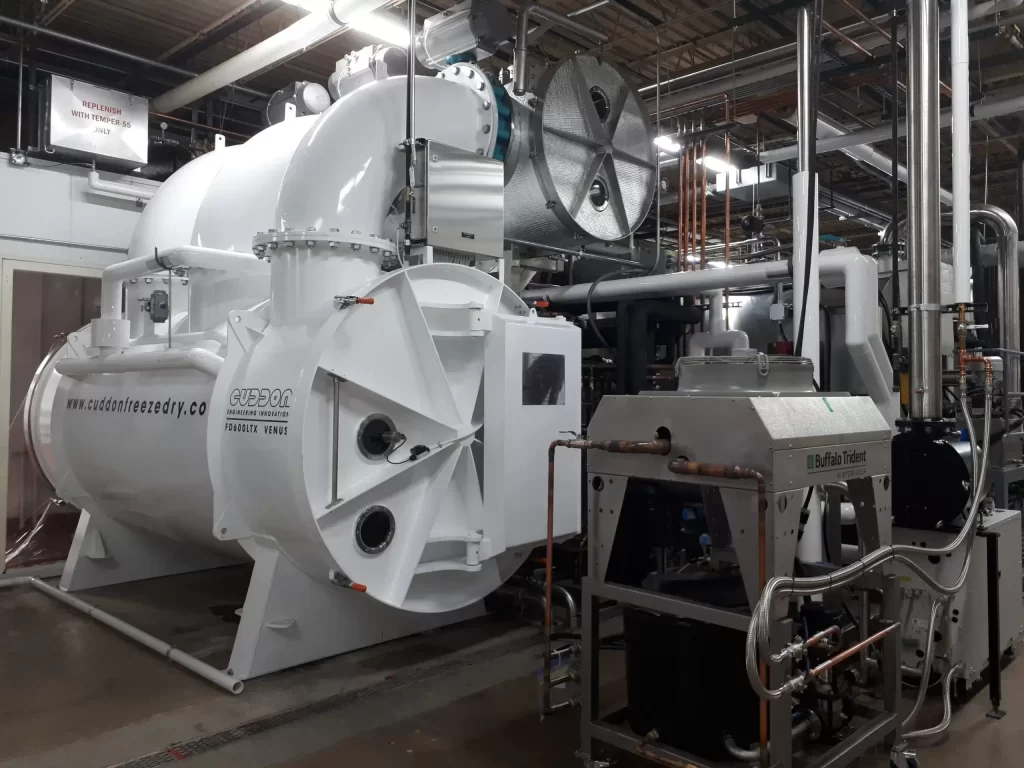
General purpose freeze drying fits operations where product geometry, moisture content and loading patterns are clearly defined.
We see this stage when:
- Pet food manufacturers increase export volumes and require repeatable batch performance
- Food ingredient producers standardise residual moisture targets across SKUs
- Cannabis processors move from development runs to scheduled production
At this level, the system must maintain vacuum stability while processing consistent tray densities. A correctly specified general purpose freeze dryer delivers structured output across validated operating ranges.
Where batch ice load, tray format and facility constraints sit within engineered limits, a general configuration delivers dependable commercial performance with room for expansion.
Key Consideration: If your product parameters are stable and projected volumes are measurable, a general purpose freeze dryer can deliver reliable scale without unnecessary design complexity.
Critical Technical Factors to Evaluate
Condenser Capacity Versus Ice Load
Your condenser must support peak vapour accumulation during sublimation without destabilising chamber pressure. When the condenser capacity operates too close to batch demand, drying time extends and throughput becomes inconsistent. We calculate the expected ice load based on product moisture percentage and total tray mass before confirming chamber size.
Shelf Temperature Distribution
Uniform heat transfer determines drying consistency. Under full production loading, uneven shelf temperatures lead to variable moisture removal across trays. Validated thermal mapping under loaded conditions provides meaningful insight into daily production behaviour.
Process Control Stability
Effective general purpose freeze dryers maintain controlled pressure and shelf ramp profiles throughout both drying phases. Stable control protects product structure, particularly in high-value nutraceutical and cannabis applications. You can read more about the process fundamentals on our Why Freeze Dry page.
Service Access and Commissioning
Installation and ramp-up influence early performance. Our engineering team works directly with customers during commissioning to ensure vacuum performance, condenser efficiency and control calibration align with specifications.
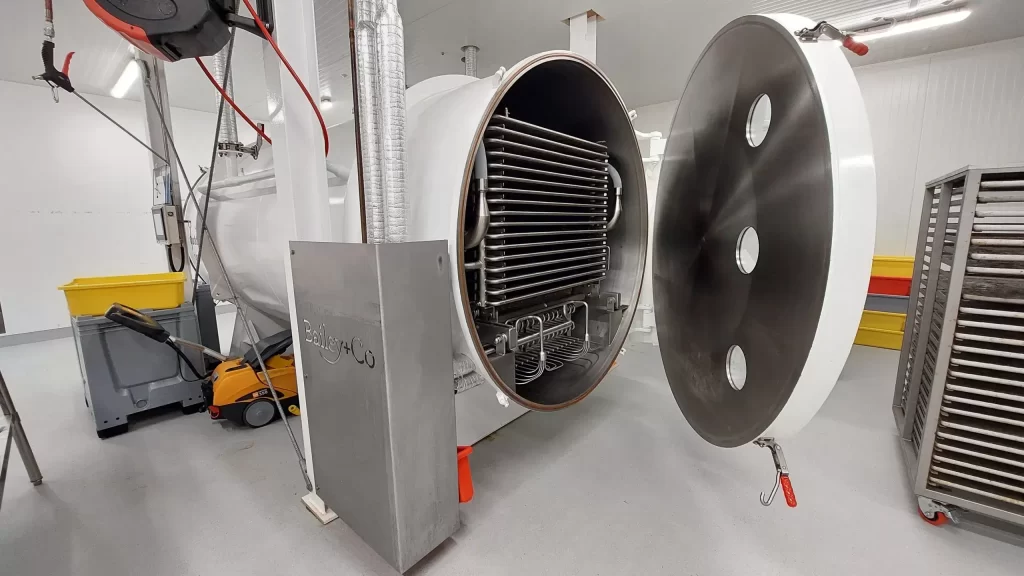
Standard Platforms and Engineered Adaptation
Our Product Range outlines structured commercial systems, including the GPC CO₂ range. These platforms deliver reliable output across defined production environments while maintaining performance.
A standard configuration is best when:
- Tray geometry aligns with validated chamber layouts
- Ice load per batch falls within engineered condenser limits
- Facility dimensions support standard chamber footprints
- Process parameters remain within defined pressure and temperature ranges
When these variables exceed standard parameters, engineering adaptation may be required. Because we design and manufacture in-house, chamber configuration, condenser sizing and control integration remain within a proven framework across every general purpose freeze dryer we build.
Evaluate Your Commercial Capacity With Cuddon Freeze Dry
Long-term performance depends on how precisely your system manages vapour load, pressure stability and throughput under sustained production.
As an ISO 9001 certified manufacturer operating since 1963, we engineer and fabricate every general purpose freeze dryer in-house and assess batch mass, moisture percentage and projected growth before confirming configuration.
If you are reviewing general purpose freeze dryers, explore our Product Range or contact us to discuss your production data. Submit an enquiry and we will provide a clear technical assessment aligned to sustained commercial output.