Cuddon Freeze Dry Logo

Archive for the ‘Food’ is_category>

General Purpose Freeze Dryers: A Complete Buyer’s Guide

Monday, September 28th, 2026

As production volumes increase, freeze drying variables tighten.

Ice load rises, condenser demand increases and minor pressure instability can extend cycle times. Systems that perform well at pilot scale often show limitations once trays are fully loaded and production runs continuously.

This is where general purpose freeze dryers must demonstrate sustained capability.

If you are evaluating a general purpose freeze dryer, you are likely addressing throughput limits, batch variability or expanding demand. The right specification requires understanding how the system manages heat transfer, vapour flow and condenser capacity under full production load.

What Defines a General Purpose Freeze Dryer

A general purpose freeze dryer is engineered for repeat commercial production across food, pet food and cannabis applications.

Three technical variables shape performance:

  1. Condenser capacity relative to maximum ice load
  2. Shelf temperature uniformity under full tray loading
  3. Stable pressure control through primary and secondary drying

Buyers comparing general freeze dryers begin with chamber size. In commercial environments, condenser performance determines whether sublimated vapour is captured efficiently without destabilising chamber pressure. An undersized condenser can increase drying time which reduces throughput efficiency.

Key Consideration: When reviewing general purpose freeze dryers, examine condenser capacity and validated thermal performance under full load, not just chamber dimensions.

When General Purpose Freeze Drying Aligns With Commercial Production
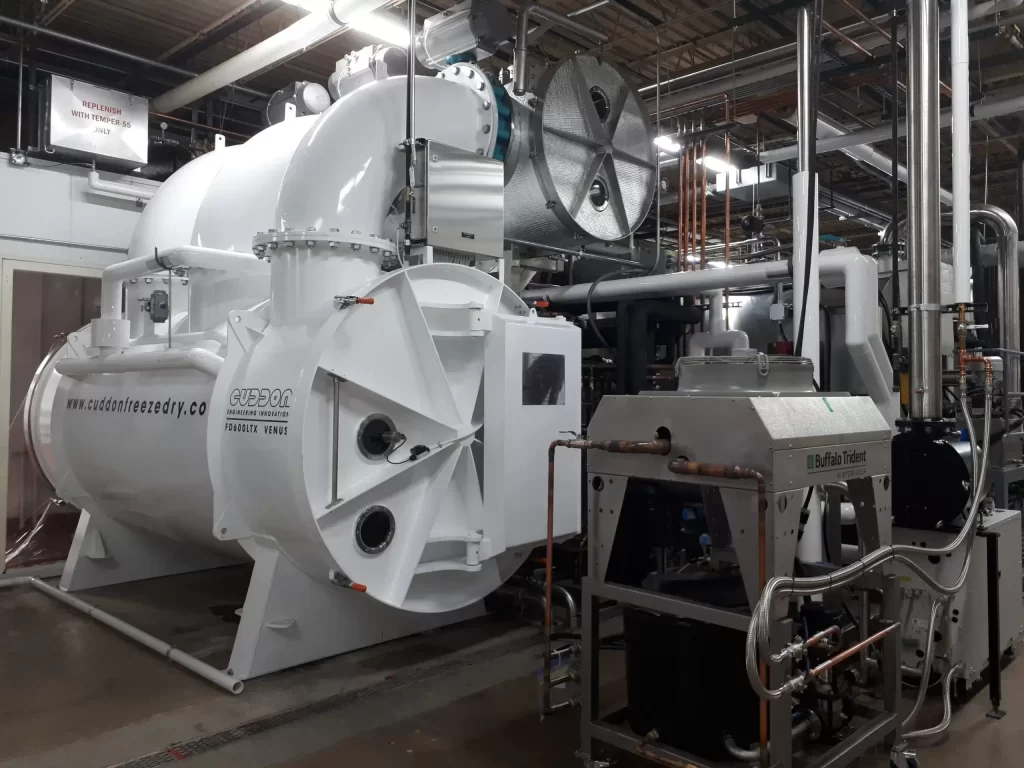

General purpose freeze drying fits operations where product geometry, moisture content and loading patterns are clearly defined.

We see this stage when:

  • Pet food manufacturers increase export volumes and require repeatable batch performance
  • Food ingredient producers standardise residual moisture targets across SKUs
  • Cannabis processors move from development runs to scheduled production

At this level, the system must maintain vacuum stability while processing consistent tray densities. A correctly specified general purpose freeze dryer delivers structured output across validated operating ranges.

Where batch ice load, tray format and facility constraints sit within engineered limits, a general configuration delivers dependable commercial performance with room for expansion.

Key Consideration: If your product parameters are stable and projected volumes are measurable, a general purpose freeze dryer can deliver reliable scale without unnecessary design complexity.

Critical Technical Factors to Evaluate

Condenser Capacity Versus Ice Load

Your condenser must support peak vapour accumulation during sublimation without destabilising chamber pressure. When the condenser capacity operates too close to batch demand, drying time extends and throughput becomes inconsistent. We calculate the expected ice load based on product moisture percentage and total tray mass before confirming chamber size.

Shelf Temperature Distribution

Uniform heat transfer determines drying consistency. Under full production loading, uneven shelf temperatures lead to variable moisture removal across trays. Validated thermal mapping under loaded conditions provides meaningful insight into daily production behaviour.

Process Control Stability

Effective general purpose freeze dryers maintain controlled pressure and shelf ramp profiles throughout both drying phases. Stable control protects product structure, particularly in high-value nutraceutical and cannabis applications. You can read more about the process fundamentals on our Why Freeze Dry page.

Service Access and Commissioning

Installation and ramp-up influence early performance. Our engineering team works directly with customers during commissioning to ensure vacuum performance, condenser efficiency and control calibration align with specifications.
Standard Platforms and Engineered Adaptation

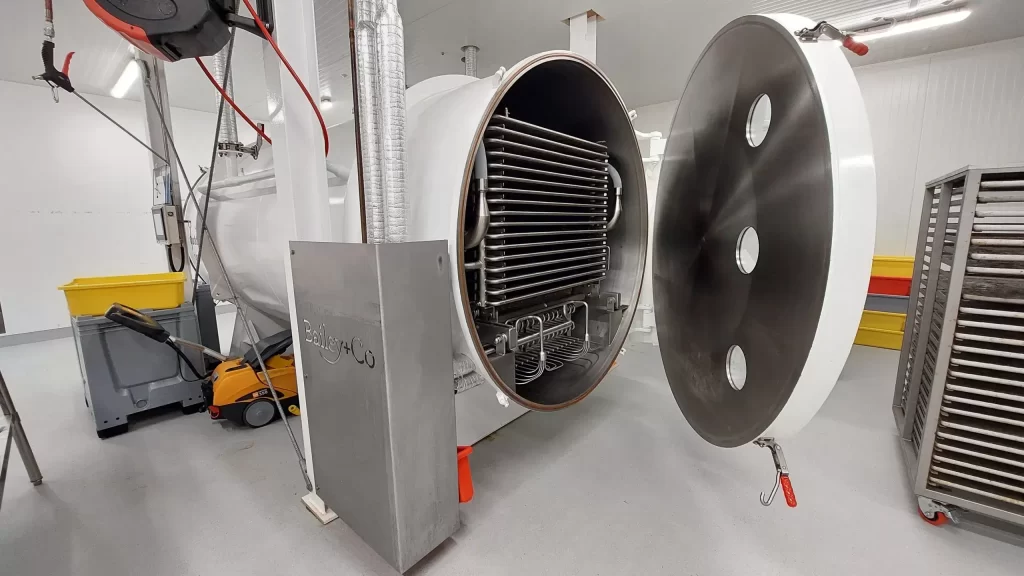
Our Product Range outlines structured commercial systems, including the GPC CO₂ range. These platforms deliver reliable output across defined production environments while maintaining performance.

A standard configuration is best when:

  • Tray geometry aligns with validated chamber layouts
  • Ice load per batch falls within engineered condenser limits
  • Facility dimensions support standard chamber footprints
  • Process parameters remain within defined pressure and temperature ranges

When these variables exceed standard parameters, engineering adaptation may be required. Because we design and manufacture in-house, chamber configuration, condenser sizing and control integration remain within a proven framework across every general purpose freeze dryer we build.

Evaluate Your Commercial Capacity With Cuddon Freeze Dry

Long-term performance depends on how precisely your system manages vapour load, pressure stability and throughput under sustained production.

As an ISO 9001 certified manufacturer operating since 1963, we engineer and fabricate every general purpose freeze dryer in-house and assess batch mass, moisture percentage and projected growth before confirming configuration.

If you are reviewing general purpose freeze dryers, explore our Product Range or contact us to discuss your production data. Submit an enquiry and we will provide a clear technical assessment aligned to sustained commercial output.

Posted in Food

Food Freeze Dryer Guide: Preserving Food for Long Storage

Friday, September 25th, 2026

If you’re a food producer serious about shelf life, product quality, or logistics costs, a commercial food freeze dryer is worth understanding properly. Not the countertop version — the industrial kind, built for production volumes, consistent batch output, and products that need to hold their quality long after they leave your facility.

This guide walks through how a food freeze dryer works at a commercial scale, how it performs against other preservation methods, and how to identify the right equipment for your product.

How Freeze Drying Preserves Food

The technical term for freeze drying is lyophilisation. We freeze the product solid, then place it in a vacuum chamber where ice converts directly to vapour through a process called sublimation, with no liquid phase or heat applied to the product during drying.

For food producers, that matters because heat is what degrades the qualities worth preserving. Flavour compounds, natural colour, cellular structure, and nutritional bioactivity all survive the freeze drying process in a way that they simply do not through spray drying or dehydration.

The moisture content drops low enough to inhibit microbial growth, giving you a shelf-stable product with no refrigeration requirement and no added preservatives. And because sublimation leaves behind a honeycomb of cavities where ice once was, the product reconstitutes quickly and faithfully when water is added.

For a closer look at the science, visit our What Is Freeze Drying? Page.

How It Compares to Other Preservation Methods

Method Heat Applied Retains Colour and Flavour Retains Structure Shelf-Stable
Freeze drying No Yes Yes Yes
Spray drying Yes (high) Partially No Yes
Dehydration Yes Partially No Yes
Air drying Yes Low No Variable

Freeze drying is the only method that removes moisture without heat exposure. For producers where end-product quality commands a price premium (food, nutraceuticals, pet food), the preservation method is a commercial decision as much as a technical one. A freeze dried food machine that removes moisture without heat exposure gives you a product that rehydrates close to fresh. Heat-treated alternatives cannot offer the same.

See our Why Freeze Dry? page for the full breakdown.

What Commercial Production Requires from the Machine

A freeze dry food machine at production scale needs consistent batch performance across diverse product loads, precise shelf temperature control through primary and secondary drying, and a refrigeration system engineered for continuous commercial use.

Two specifications anchor every sizing decision:

Ice capacity (kg)

The total moisture the machine removes and condenses per batch. This is the primary measure of throughput capacity.

Shelf area (m²)

The usable loading surface inside the vacuum chamber determines how much product you can run per cycle.

Spec both your product and volume from the start. A machine undersized on either figure will limit your production before anything else in the line does. We cover how to think through both on our applications page.

Matching the Machine to Your Product

General Purpose — GPC Range

Fruits, vegetables, meats, dairy, ready meals, pet food, and nutraceuticals all process well on a General Purpose freeze dryer. Our GPC range runs on natural CO₂ refrigerant, which keeps operating costs down and reduces environmental footprint compared to conventional refrigerants. Batch capacity runs from the FD600GPC at 600 kg ice capacity up to the FD1800GPC at 1,800 kg, covering early commercial operations through to large-scale production facilities.

High-Sugar and High-Acid Products — LT Range

Mango, citrus, honey, and certain confectionery have a lower eutectic point, which makes them significantly harder to freeze solid cleanly. Our Low-Temperature (LT) range is built for this, with an ice coil operating at a substantially lower temperature to handle what a standard machine cannot process consistently.

Both ranges support multi-product use, so a single machine can move across different product types between cycles. Browse our full product range to see where your product fits.

Why Cuddon Freeze Dry

We have been engineering and manufacturing commercial food freeze dryers in New Zealand since 1963. Every machine is designed, fabricated, and tested in-house under ISO 9001 certification — a quality management standard that gives clients consistent, verifiable production quality across every unit we deliver.

Our freeze dryers have been in documented commercial operation for close to 40 years, and we back every machine with a fully turnkey service: consult on your product, design to your requirements, build, install, commission, train your team, and provide ongoing after-sales support. Our sales and service network spans Oceania, the USA, Canada, and Europe.

There are no third-party installers, no reseller between the manufacturer and the buyer. When you have a question or a problem, you’re talking to the people who built the machine.

Let’s Talk About Your Product

If you’re scoping a commercial food freeze dryer for your operation from early feasibility through to final specification, get in touch to discuss your product and production requirements with our team directly.


Posted in Food

Commercial Freeze Drying Machine: Features and Costs

Friday, September 25th, 2026

When you’re evaluating a commercial freeze drying machine, the purchase price is only one part of the decision. The specifications you choose today can influence throughput, operating costs and production capacity for years to come.

At Cuddon, we’ve been designing and manufacturing freeze dryers since 1963. A common conversation starts when a producer reaches the limits of their existing capacity or wants greater consistency from the finished product. At that point, equipment specifications become closely tied to production targets, operating costs and product quality.

What Drives the Cost of a Commercial Freeze Drying Machine?

The cost of a commercial freeze drying machine extends beyond its physical size.

  • Shelf area, refrigeration design, condenser capacity and automation all contribute to the final specification.
  • Different products place different demands on refrigeration systems, shelf spacing and processing temperatures.
  • A freeze dryer processing premium pet food operates under different conditions from one handling fruit ingredients, nutraceutical products or cannabis.

Those decisions continue influencing throughput, energy consumption and production capacity long after installation.

Key Features to Look for in Commercial Freeze Dryers

1. Capacity and Shelf Area

Shelf area determines how much product moves through each batch.

If you’re planning for larger production volumes, capacity deserves attention early in the evaluation process. Additional shelf area can create room for higher throughput without immediately requiring another freeze dryer.

We’ve seen manufacturers reach capacity sooner than expected when:

  • New customers increase demand
  • Export opportunities open up
  • Additional product lines enter production

In some cases, businesses outgrow smaller systems long before they expected. Production demand can increase quickly once distribution expands or a product gains traction in new markets.

A large commercial freeze dryer can help accommodate that growth while reducing pressure on production schedules.

2. Refrigeration Design

Refrigeration operates throughout every cycle, making it a significant contributor to ownership costs.

Our GPC CO₂ range uses natural carbon dioxide refrigerant, helping reduce energy consumption across thousands of production hours.

For products requiring lower processing temperatures, our LT range supports applications such as:

  • High-sugar products
  • High-acid formulations
  • Temperature-sensitive ingredients

3. Heat Plates

Heat plates in a freeze dryer provide the energy required to move ice from the frozen product to the ice trap. Without them, sublimation would stall, and drying would be slow or incomplete.
Cuddon freeze dryers use a batch-style conductive heat plate designed for high-quality commercial lyophilisation. Key advantages include:

Cuddon ThermaFluxTM Liquid-filled shelves:

  • For precise temperature control.
  • Freeze Override protects the product in the event of a vacuum failure.
  • Prevents product thawing during loading and initial vacuum pull down.
  • No product scorching (compared with electric shelf systems).
  • Freeze in place ability if required.

4. Recipe Control

Recipe management allows operators to save validated drying parameters and reproduce them across future batches.

As production volumes increase, repeatable processing conditions can help maintain product consistency across larger runs and multiple operators. This is valuable for manufacturers producing premium products that prioritise batch-to-batch consistency.

Product Value Changes the Economics

For producers of premium pet food, nutraceutical ingredients and cannabis products, a single batch may represent a substantial amount of revenue.

For businesses competing on product quality, drying performance becomes part of the finished product itself.

Freeze-drying performance can influence:

  • Texture
  • Appearance
  • Yield retention

Those factors can influence how a product is received by distributors, retailers and end users.

Looking Beyond Purchase Price

Remember: The purchase price appears once, while operating costs continue throughout the machine’s life cycle.

When comparing equipment, focus on the areas that continue affecting production after commissioning:

  • Energy consumption
  • Maintenance requirements
  • Technical support
  • Equipment lifespan

Small differences in energy use can accumulate across years of operation. Downtime can affect throughput, delivery schedules and customer commitments when production capacity is under pressure.

A lower upfront cost can become less compelling if higher operating expenses continue across every production cycle. For this reason, ownership costs deserve the same scrutiny as the initial capital investment.

Why Support Belongs in the Evaluation Process

A freeze dryer becomes part of your production operation from the day it is commissioned. Support frequently extends beyond installation.

Production teams may require assistance with:

  • Commissioning
  • Operator training
  • Recipe development
  • Troubleshooting

Access to experienced engineers can help resolve issues faster and keep production moving.

For businesses entering freeze drying for the first time, training and commissioning support can influence how quickly equipment reaches its intended output.

At Cuddon, we manufacture our systems in New Zealand and support customers from commissioning through to ongoing production. That continuity helps operators build confidence in their processes as production volumes increase.

Our range includes general-purpose freeze dryers, low-temperature systems, cannabis freeze dryers and document recovery freeze dryers, allowing us to recommend equipment based on your application and production requirements.

Choosing the Right Commercial Freeze Dry Machine

Freeze-drying equipment is a long-term capital investment. The strongest purchasing decisions consider how the machine will perform across future production volumes, operating conditions and product requirements, not simply how it performs on day one.

Capacity, ownership costs and application requirements should all form part of the evaluation process before committing to a commercial freeze dry machine.

To discuss your project, explore our applications or submit a sales enquiry and speak with our team.

Posted in Food